Kei te hoki mai ngā manu a Taranaki - Taranaki's birds are returning...
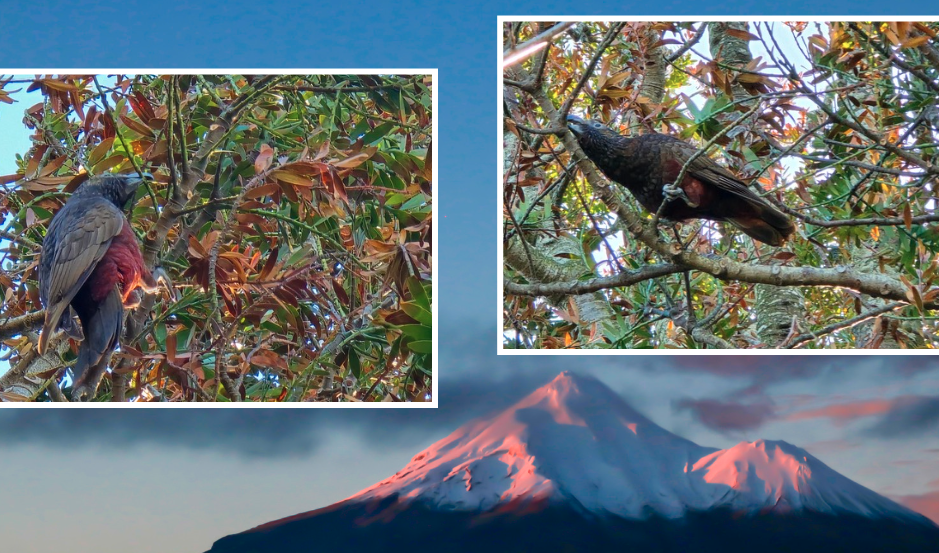
Kākā sightings in Taranaki (Rahotu). Text and photos: Cherry Smith, Te Ara Taiao.
There have been multiple sightings of a kākā in Rahotu in recent times. Te Ara Taiao's "ngā manu pikoko" group (student enviro-leaders) at Rahotu School reported this to teachers during their trap-checking routines. We would like to give a huge mihi to everyone involved with trapping and manu kaitiakitanga (bird protection). One of our team writes....
When some amazing tamariki (children) told us they had seen a kākā at school, in an area that is more coastal farmland than bush, a number of us 'grown ups' were somewhat sceptical. What business would a kākā have here?
Repeated mentions by our reputable sources (namely the children we work with) suggested these observations needed further investigation. The children (tamariki) we work with in multiple schools, are taiao toa (environmental champions). Every week they enthusiastically check and reset traps, maintain plantings, clear weeds, grow native plants and monitor the mauri (life force) of the taiao (environment). We train them to identify birds, plants, and threats to wildlife. Why wouldn't they know what they saw?
Advising them to tell their taiao-passionate teacher the next time they saw the kākā, we were surprised when the VERY NEXT DAY the kākā was spotted and "officially" re-verified with photographs by The Principal. I was experiencing severe FOMO, until I was with the sharp-eyed tamariki a few days later and the kākā (which probably had been there every time I visited) was at last gloriously apparent to me. What a sight to behold! We stopped all our mahi (work) and immersed ourselves in observation. The tamariki offered names like "Ataahua" (beautiful) and "Kīkī the Kākā" and made jokes about not mixing up kaka and kākā!
This highlighted the importance of tamariki BEING and DOING in the taiao. We (adults) need to create opportunities for children to be taiao experts; to teach us or show us these magical moments.
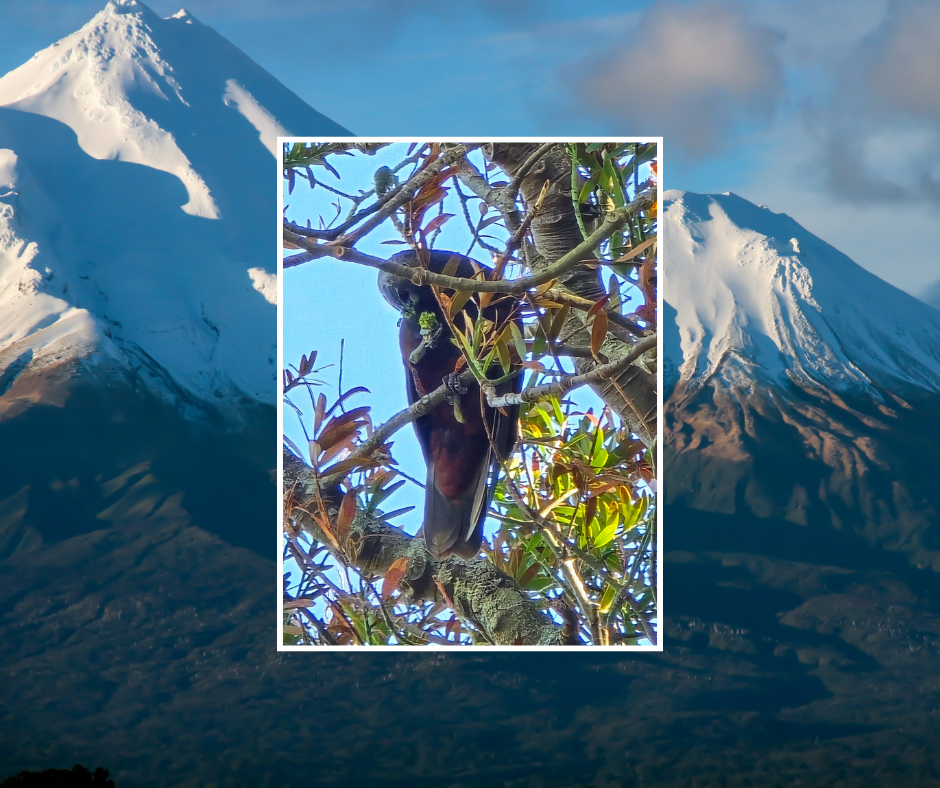
Kākā in Rahotu, Taranaki. Photo: Cherry Smith.
As I excitedly showed these photos and video I took to other tamariki in the kura – some shrugged, saying "it's just a bird" or "is it special?'. It wasn't until I declared I was "nearly 60" and had "never seen a kākā in the "wild" before", that they realised the significance. This also highlights why it is so important that we get children (and 60-year-olds) outside and interested in kaitiakitanga (protection of nature).
As our eyes grow dim and our hearing is fading, it is the mokopuna (grandchildren) that will see and hear the birds and other species returning (or disappearing). It is important we provide space and time for both tamariki and manu (birds) to return to the taiao...
Happy are the hearts who hear and see 'Ka hoki mai ngā manu a Taranaki' - the birds of majestic Taranaki returning.