At this year’s CA ANZ Taranaki Business Forum—centred on the theme “Shaping Tomorrow Together”—Sustainable Taranaki’s Sophie Walker and Mieke Verschoor shared a powerful message: the future of our region depends on the choices, collaborations, and innovations we invest in today.
Their session, “Leading with Impact: A Case Study in Sustainability-Driven Transformation in Taranaki,” explored the region’s shift toward circular, resilient, and regenerative systems—highlighted through the award-winning Green Loop initiative.
Why Sustainability Matters in Taranaki
Taranaki is a region shaped by diversity—farming, energy, manufacturing, tourism—and is home to a highly skilled and passionate workforce. Yet, like many regions across Aotearoa, it faces urgent environmental challenges:
Limited local processing options for waste
Commercial organic waste travelling hundreds of kilometres out of the region
Soils needing regeneration after decades of intensive land use
Increasing expectations from customers, regulators, and global markets
As Sophie shared, “Taranaki has the talent, resources, and community spirit to lead Aotearoa in building a resilient, climate-conscious economy.”
The opportunity is significant—strengthening local systems, reducing emissions, and building long-term regional wellbeing.
Sustainable Taranaki: Turning Purpose Into Action
Sustainable Taranaki has spent years supporting local businesses, events, and communities to make smarter choices around waste and sustainability. What began with education has grown into hands-on behaviour change, practical systems, and region-wide collaboration.
Their work includes:
Waste audits and sustainability assessments
Organic waste solutions, including Green Loop
Circular economy innovation, from local procurement to system redesign
CSR support, including clean-ups, volunteering, and community initiatives
The momentum is clear: more businesses are stepping forward, cross-sector collaborations are increasing, and local enthusiasm for sustainability is stronger than ever.
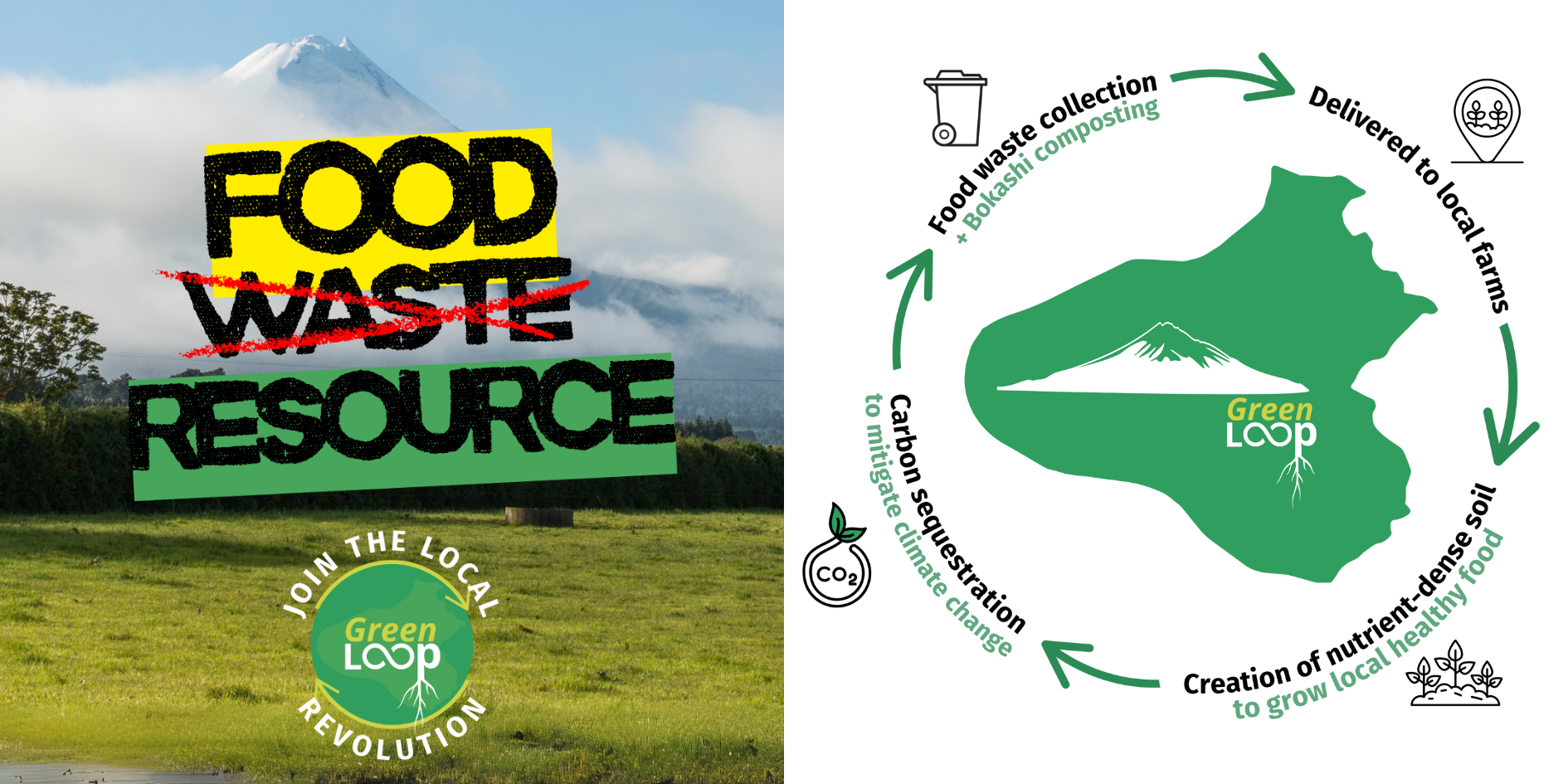
Visit www.greenloop.org.nz to learn more about the Green Loop.
Introducing Green Loop: Circular Economy in Action
One of Sustainable Taranaki’s most transformative projects is Green Loop—a collaboration designed to keep food waste local, reduce carbon emissions, and regenerate Taranaki soils.
The Problem
Commercial food waste—cooked food, meat, dairy—cannot go into traditional compost.
Businesses were sending organic waste hundreds of kilometres out of the region.
Valuable nutrients were being lost instead of returning to the land.
The Solution
Green Loop uses a Bokashi fermentation system, powered by beneficial microorganisms such as Lactobacillus. This method can process almost all food waste, including items typically considered too difficult for compost.
How Green Loop Works
Businesses separate food scraps during the day.
Scraps are added to a Green Loop bin, compressed to remove oxygen, and sprinkled with Bokashi Zing.
Bins are collected weekly or on demand.
Material is matured, mixed with carbon, and composted on local farms.
Finished compost is used to support soil regeneration across the region.
Who’s Involved?
Hospitality and corporate offices
Tourism operators
Community groups
Events
Farms of all sizes
Tertiary partners such as Massey University
Green Loop now supports seven local businesses and counting, has diverted significant waste from landfill, created new job opportunities, and won multiple awards for innovation and impact.
Why It Matters
Sophie and Mieke emphasised that Green Loop represents far more than a waste solution—it’s a model for systemic change.
For Businesses
Lower waste disposal costs
Reduced transport emissions
Actionable environmental reporting
Stronger brand trust
Alignment with future procurement and regulatory expectations
For the Region
Keeping valuable nutrients in Taranaki
Increasing local resilience
Creating new circular economy jobs
Building community connectedness
Strengthening partnerships across sectors
As Sophie noted, “When people see how their actions fit into a bigger vision, change accelerates.”
Collaboration: The Engine of Innovation
The success of Green Loop is built on partnerships—with organisations such as Toi Foundation, Venture Taranaki, Wild for Taranaki, local councils, hospitality leaders, construction partners, and more.
Key lessons learned:
Build trust early
Think system-wide, not single-issue
Test, adapt, and stay transparent
Align sustainability with business goals
Embrace openness to innovation
This collaborative approach ensures the model can continue to evolve—and can be replicated across Aotearoa in the future.
Where to From Here?
Sophie and Mieke closed with a challenge to the business community:
Start with small steps—waste is a great place to begin. Every organisation can be part of shaping a more resilient regional economy.
Businesses are encouraged to:
Connect with Sustainable Taranaki for audits or support
Join the Green Loop programme
Begin their own circular practices
Ask suppliers for improvements
Collaborate across industries to build shared solutions
As Mieke reminded the audience: “Sustainability isn’t just about protecting what we have—it’s about creating something better, together.”
Join the Movement
Sustainable Taranaki invites businesses, community groups, and individuals to step into the future of our region—one where waste becomes resource, collaboration drives innovation, and Taranaki continues leading sustainability across Aotearoa.
If you’re ready to explore opportunities or join Green Loop, contact our team here.